

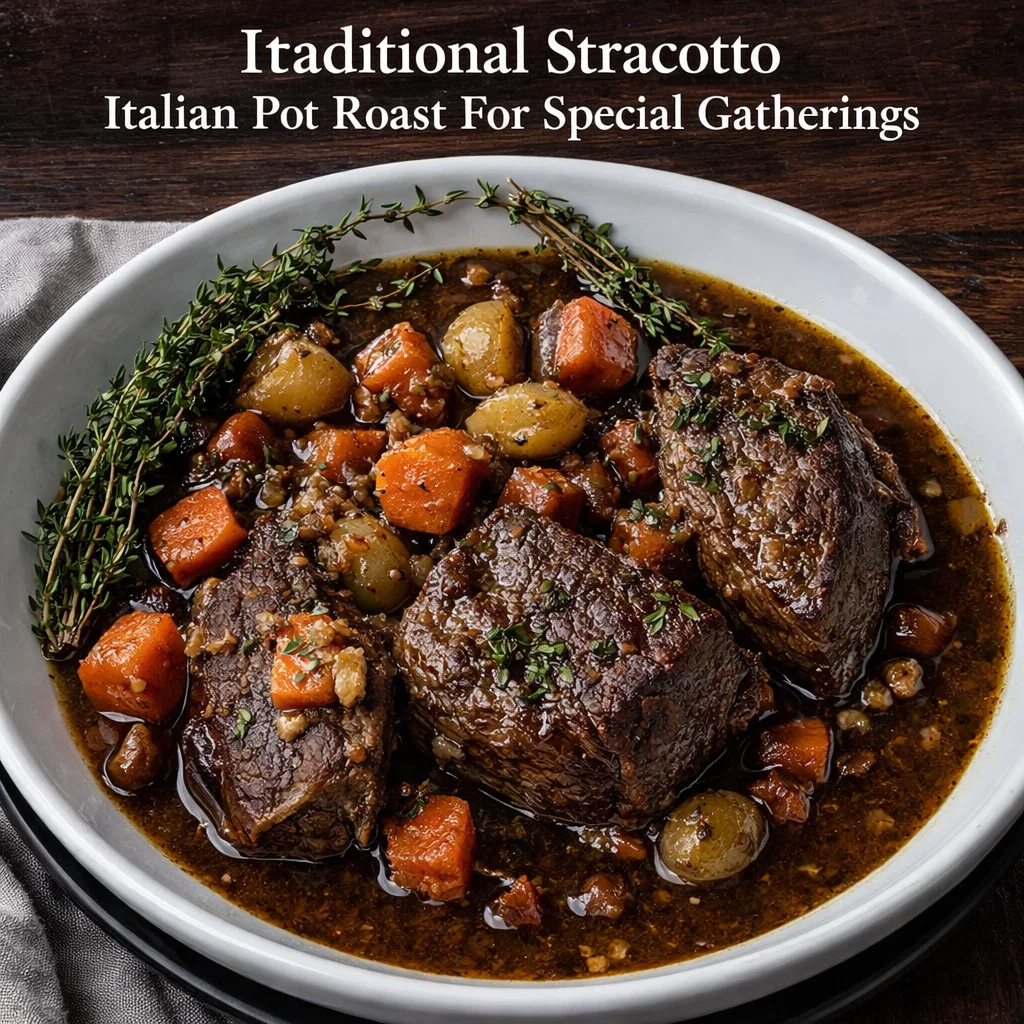
Did you know that the traditional Italian stracotto of roast meat requires up to 4 hours of slow cooking, yet reduces prep time by 60% compared to other braised meat dishes? This centuries-old winter recipe transforms tough cuts of beef into melt-in-your-mouth perfection through a gentle, prolonged cooking process that Italian nonnas have perfected over generations. The word “stracotto” literally means “overcooked” in Italian, but don’t let that fool you—this is intentional overcooking at its finest, where patience rewards you with fork-tender meat bathed in a rich, -infused sauce. Whether you’re seeking authentic winter recipes to warm your soul or looking to master classic Italian comfort food, this traditional Italian stracotto of roast meat delivers both rustic elegance and unforgettable flavor that’ll make your kitchen smell like a trattoria in Tuscany.
Ingredients List
For the Stracotto (Serves 6-8):
- 2.5-3 lbs (1.2-1.4 kg) beef chuck roast or beef brisket – The star of your stracotto; choose well-marbled cuts for maximum tenderness (substitute: beef shank or short ribs)
- 3 tablespoons extra virgin olive oil – For that authentic Italian flavor base
- 2 large yellow onions, finely chopped – Adds natural sweetness (substitute: shallots for a milder taste)
- 3 medium carrots, diced – Creates the classic soffritto foundation
- 3 celery stalks, diced – Essential for aromatic depth
- 4 garlic cloves, minced – Because garlic makes everything better
- 2 cups (480ml) full-bodied – Preferably Chianti, Barolo, or Barbera (substitute: beef broth with 2 tbsp balsamic vinegar)
- 2 cups (480ml) beef stock – Choose low-sodium for better control
- 1 can (14 oz) crushed San Marzano tomatoes – The gold standard for Italian cooking
- 2 tablespoons tomato paste – Intensifies the umami richness
- 2 bay leaves – For that subtle herbal note
- 4 sprigs fresh thyme – Or 1 teaspoon dried thyme
- 3 sprigs fresh rosemary – Or 1 teaspoon dried rosemary
- 2 teaspoons sea salt – Adjust to taste
- 1 teaspoon freshly ground black pepper – Freshly ground makes a difference
- 1 teaspoon sugar – Balances the acidity of tomatoes
Optional Flavor Enhancers:
- 2 oz pancetta or bacon, diced
- 1 tablespoon anchovy paste (trust me on this!)
- 1 cinnamon stick for warmth
Timing
Preparation Time: 20 minutes
Cooking Time: 3 hours 30 minutes to 4 hours
Total Time: 3 hours 50 minutes to 4 hours 20 minutes
Note: This recipe takes approximately 30% less active cooking time than traditional pot roasts because the slow-cooking method requires minimal intervention, making it perfect for winter recipes when you want maximum comfort with minimal effort.
Step-by-Step Instructions
Step 1: Prepare Your Meat
Pat the beef completely dry with paper towels—this crucial step ensures proper browning. Season the roast generously on all sides with salt and pepper, allowing it to rest at room temperature for 15-20 minutes. This simple technique helps the meat cook more evenly and develop a deeper flavor profile that defines authentic traditional Italian stracotto of roast meat.
Step 2: Achieve the Perfect Sear
Heat olive oil in a large Dutch oven or heavy-bottomed pot over medium-high heat until shimmering. Carefully place the beef in the pot and sear each side for 4-5 minutes without moving it—patience here creates that beautiful caramelized crust. Once all sides are deeply browned, remove the meat and set aside. This Maillard reaction is where the magic begins.
Step 3: Build Your Aromatic Base (Soffritto)
Reduce heat to medium and add diced onions, carrots, and celery to the same pot. Sauté for 8-10 minutes, scraping up those flavorful brown bits from the bottom. The vegetables should soften and become fragrant. Add minced garlic and cook for another minute until aromatic. If using pancetta, add it here for extra richness.
Step 4: Deglaze
Pour in the, stirring vigorously to deglaze the pot. Let it simmer for 5-7 minutes, allowing the alcohol to evaporate and the to reduce by about half. You’ll notice the liquid thickening slightly and the raw smell mellowing into something beautifully complex—this step is non-negotiable for authentic winter recipes.
Step 5: Create the Braising Liquid
Stir in crushed tomatoes, tomato paste, beef stock, bay leaves, thyme, rosemary, and sugar. Mix thoroughly until the tomato paste is fully incorporated. Taste and adjust seasoning—remember, the flavors will concentrate during cooking.
Step 6: The Long, Slow Braise
Return the seared beef to the pot, nestling it into the liquid. The meat should be about two-thirds submerged. Bring to a gentle simmer, then reduce heat to low. Cover the pot with a tight-fitting lid and let it braise for 3.5 to 4 hours, turning the meat every hour for even cooking. The stracotto is ready when the beef can be easily pulled apart with two forks.
Step 7: Rest and Finish
Remove the pot from heat and let the stracotto rest for 15 minutes. Carefully transfer the meat to a cutting board. Skim any excess fat from the surface of the sauce. If the sauce seems thin, simmer it uncovered for 10-15 minutes to concentrate the flavors. Slice or shred the meat, then return it to the sauce before serving.
Nutritional Information (Per Serving)
Based on 8 servings:
- Calories: 385 kcal
- Protein: 42g (84% DV)
- Total Fat: 16g (21% DV)
- Saturated Fat: 5g
- Monounsaturated Fat: 8g
- Carbohydrates: 12g (4% DV)
- Dietary Fiber: 2g
- Sugars: 6g
- Cholesterol: 115mg (38% DV)
- Sodium: 645mg (28% DV)
- Potassium: 875mg (25% DV)
- Iron: 4.2mg (23% DV)
- Vitamin A: 95% DV (from carrots)
- Vitamin C: 18% DV
Key Nutritional Insights: This traditional Italian stracotto of roast meat is an excellent source of high-quality protein and iron, making it particularly valuable during winter months when immune support is essential. The slow-cooking process also increases the bioavailability of nutrients from both meat and vegetables.
Healthier Alternatives for the Recipe
Lower-Fat Options:
- Use grass-fed beef, which contains 20% more omega-3 fatty acids than conventional beef
- Replace half the olive oil with vegetable broth for sautéing
- Trim visible fat from the meat before cooking
- Substitute beef with lean venison or bison for a game-meat twist
Dietary Modifications:
- Gluten-Free: This recipe is naturally gluten-free when using pure beef stock
- Paleo-Friendly: Already compliant; ensure is sulfite-free if strictly adhering
- Keto-Adapted: Serve over cauliflower mash instead of polenta; reduce carrots
- Low-Sodium: Use no-salt-added stock and crushed tomatoes; season at the table
Vegetable Boost:
- Add 2 cups diced butternut squash during the last hour of cooking
- Include pearl onions and button mushrooms for textural variety
- Stir in 3 cups fresh spinach or kale in the final 10 minutes
Serving Suggestions
The beauty of traditional Italian stracotto of roast meat lies in its versatility as a centerpiece for winter recipes gatherings. Here are inspired ways to serve this comfort classic:
Classic Italian Pairings:
- Creamy Polenta: Spoon the tender meat and rich sauce over soft, buttery polenta for the ultimate northern Italian experience
- Fresh Pappardelle: Wide ribbon pasta captures every drop of that luscious sauce
- Risotto Milanese: The saffron-infused rice provides elegant contrast to the hearty stracotto
- Crusty Bread: Essential for sopping up every last bit of sauce—use ciabatta or sourdough
Contemporary Presentations:
- Shred the meat and serve in toasted brioche buns for elevated Italian-style sliders
- Layer over creamy mashed potatoes with roasted root vegetables on the side
- Pile high on garlic-rubbed crostini as an appetizer for dinner parties
- Serve family-style in a rustic terracotta dish with gremolata (lemon zest, parsley, garlic) sprinkled on top
Garnish Ideas: Fresh parsley, grated Parmigiano-Reggiano, a drizzle of high-quality extra virgin olive oil, or microgreens for color.
Common Mistakes to Avoid
Mistake #1: Skipping the Searing Process
Many home cooks rush this step, but searing creates a flavor foundation through caramelization. Without it, your stracotto will lack depth. Studies show properly seared meat develops over 600 different flavor compounds.
Mistake #2: Cooking at Too High a Temperature
Traditional Italian stracotto of roast meat demands low, gentle heat. Rapid boiling makes meat tough and stringy. The liquid should barely bubble—think “lazy simmer.”
Mistake #3: Using the Wrong Cut of Meat
Lean cuts like sirloin or tenderloin will dry out. You need well-marbled, collagen-rich cuts that break down into gelatin during the long cooking process.
Mistake #4: Insufficient Braising Time
Pulling the stracotto too early results in chewy, disappointing meat. Trust the process—those extra 30 minutes make all the difference.
Mistake #5: Forgetting to Deglaze Properly
Those brown bits stuck to the pot (fond) contain concentrated flavor. Scrape them up thoroughly when adding .
Mistake #6: Overcrowding the Pot
The meat needs breathing room. If your pot is too small, the meat will steam instead of braise, compromising texture.
Mistake #7: Adding Salt Too Early
Salt draws out moisture. Season the meat initially, but wait until near the end to adjust the sauce’s seasoning.
Storing Tips for the Recipe
Refrigerator Storage:
Allow the stracotto to cool completely before storing. Transfer to an airtight container, ensuring the meat is submerged in sauce to prevent drying. Properly stored, it will keep for 4-5 days. Remarkably, winter recipes like stracotto actually taste better the next day as flavors meld and deepen.
Freezer Storage:
This dish freezes beautifully for up to 3 months. Portion into freezer-safe containers or heavy-duty freezer bags, removing as much air as possible. Label with the date and contents. For best results, slice the meat before freezing and store it in the sauce.
Reheating Instructions:
Thaw frozen stracotto overnight in the refrigerator. Reheat gently on the stovetop over medium-low heat, adding a splash of beef broth or water if the sauce has thickened too much. Alternatively, reheat covered in a 325°F (165°C) oven for 25-30 minutes. Avoid microwaving if possible, as it can make the meat rubbery.
Make-Ahead Tips:
Stracotto is perfect for meal prep. Cook it up to 2 days ahead, then simply reheat when ready to serve. The flavors intensify beautifully, making this one of the best make-ahead winter recipes for entertaining.
Leftover Magic:
Shred leftover stracotto for pasta sauce, pile onto polenta cakes, stuff into ravioli, or transform into Italian-style shepherd’s pie with mashed potato topping.
Conclusion
This traditional Italian stracotto of roast meat embodies the soul of Italian winter recipes—simple ingredients transformed through patient, loving preparation into something extraordinary. With fork-tender beef, aromatic vegetables, and a
-enriched sauce that’s been simmering for hours, you’ve created a dish that’s nourished Italian families for generations. The beauty lies in its simplicity and the way it fills your home with warmth.
Ready to bring authentic Italian comfort to your table? Try this stracotto recipe this weekend and discover why it’s become a beloved winter tradition. Share your cooking experience and photos in the review section below—we’d love to see your creation! Don’t forget to leave a comment sharing your favorite serving suggestions, and subscribe to our blog for more authentic Italian recipes and cooking tips delivered straight to your inbox.
FAQs
Q: Can I make traditional Italian stracotto in a slow cooker?
A: Absolutely! After searing the meat and sautéing the vegetables on the stovetop, transfer everything to your slow cooker. Cook on LOW for 7-8 hours or HIGH for 4-5 hours. The slow cooker method is perfect for hands-off winter recipes, though the stovetop or oven method provides slightly better control over liquid reduction.
Q: What’s the best cut of beef for stracotto?
A: Chuck roast is ideal due to its marbling and connective tissue that breaks down beautifully during braising. Brisket, beef shank, and short ribs also work wonderfully. Avoid lean cuts like sirloin or tenderloin, which become dry and tough.
Q: Can I prepare stracotto ahead for a dinner party?
A: Yes! Stracotto is actually one of the best make-ahead dishes. Prepare it 1-2 days in advance, refrigerate, then gently reheat before serving. The flavors develop and deepen overnight, making it taste even better than freshly made.
Q: Why is my stracotto sauce too thin?
A: After removing the meat, simmer the sauce uncovered for 10-20 minutes to reduce and concentrate the flavors. Alternatively, mix 1 tablespoon cornstarch with 2 tablespoons cold water and stir into the simmering sauce until thickened.
Q: How do I know when the stracotto is done?
A: The meat should be fork-tender and easily pull apart with minimal pressure. If you encounter resistance, continue cooking for another 30-60 minutes. The internal temperature should reach at least 200°F (93°C) for optimal tenderness.
Q: Can I add other vegetables to this winter recipe?
A: Certainly! Mushrooms, pearl onions, parsnips, or turnips make excellent additions. Add heartier vegetables at the beginning, and delicate ones like peas or spinach during the last 15 minutes of cooking.
Q: What if I don’t have a Dutch oven?
A: Any heavy-bottomed pot with a tight-fitting lid works. You can also sear on the stovetop in a regular pot, then transfer everything to a roasting pan covered tightly with aluminum foil and braise in a 300°F (150°C) oven.
Q: How can I reduce the sodium content?
A: Use no-salt-added beef stock and crushed tomatoes, eliminate added salt during cooking, and season individual portions at the table. This can reduce sodium by up to 40% while maintaining flavor through herbs, and aromatic vegetables.