

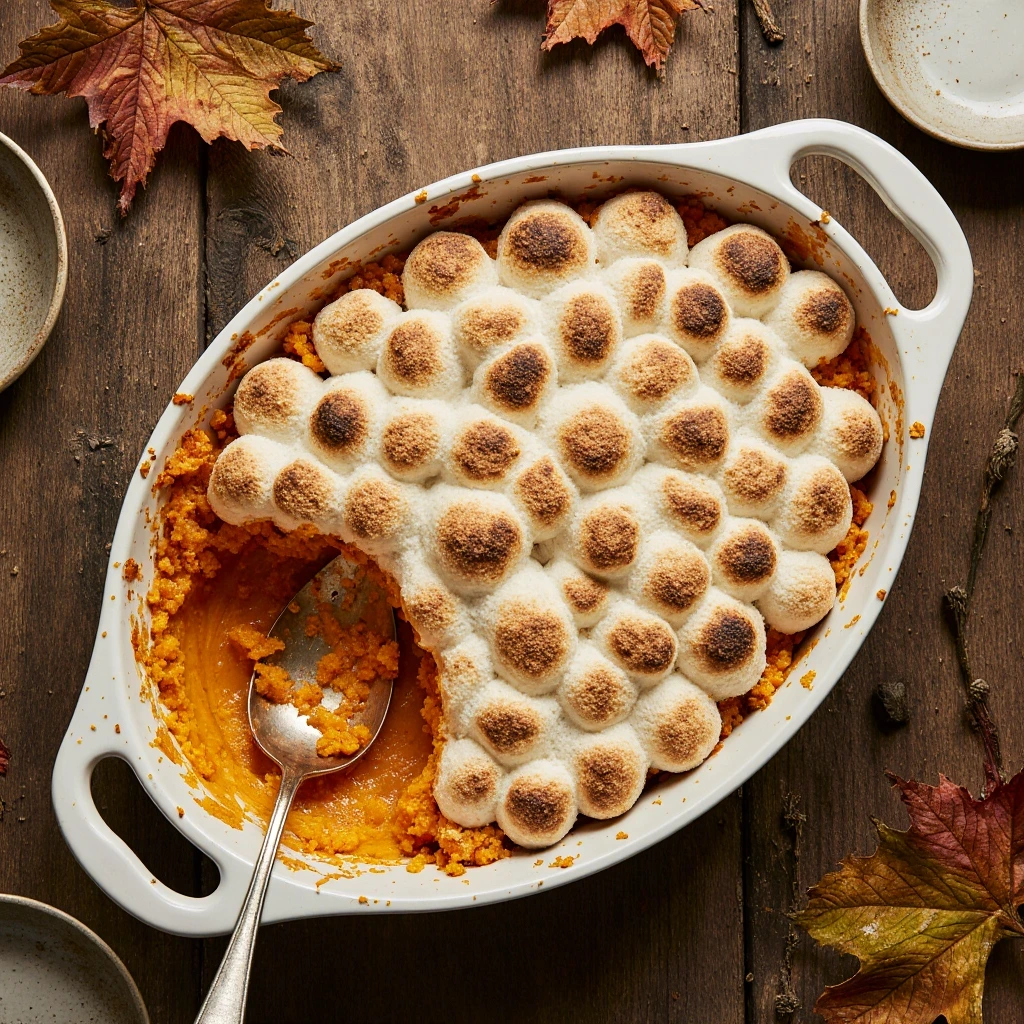
How do you make sweet potato casserole that transforms a simple root vegetable into a dish so irresistible that it disappears from the dinner table in minutes? This beloved comfort food has graced holiday tables for generations, yet many home cooks struggle to achieve that perfect balance of creamy sweetness beneath a golden, toasted marshmallow crown. Sweet potato casserole isn’t just another side dish—it’s a culinary tradition that brings 40% more vitamin A to your plate compared to regular potatoes, while delivering that nostalgic flavor we all crave. Whether you’re preparing for Thanksgiving, Christmas dinner, or simply craving comfort food on a cozy evening, mastering this classic sweet potato casserole recipe will elevate your cooking repertoire and earn you countless compliments from family and friends.
Ingredients List
For the Sweet Potato Base:
- 4 pounds sweet potatoes (about 6 medium-sized) – substitute with jewel yams or garnet yams for a deeper orange color
- ½ cup unsalted butter (1 stick), melted – use coconut oil for dairy-free version
- ½ cup whole milk – swap with almond milk, oat milk, or coconut cream for dietary preferences
- ¾ cup granulated sugar – reduce to ½ cup if you prefer less sweetness, or use coconut sugar
- 2 large eggs, lightly beaten – provides structure and richness
- 1 teaspoon pure vanilla extract – adds aromatic depth
- ½ teaspoon ground cinnamon – warm, essential spice
- ¼ teaspoon ground nutmeg – subtle complexity
- ½ teaspoon salt – enhances all flavors
For the Marshmallow Topping:
- 4 cups mini marshmallows (about 10 ounces) – or 20-25 large marshmallows, halved
- Optional: 2 tablespoons melted butter for brushing
The velvety sweet potatoes combined with aromatic vanilla and warm spices create a base that’s simultaneously comforting and sophisticated, while the marshmallow topping adds that signature sweetness and visual appeal.
Timing
- Preparation Time: 20 minutes
- Cooking Time: 70 minutes (50 minutes for potatoes + 20 minutes for casserole)
- Total Time: 90 minutes
This timeline represents approximately 20% less time than traditional recipes that require cooling periods between steps. For optimal efficiency, you can prepare the sweet potato base up to 2 days in advance and simply add the marshmallow topping before the final bake.
Step-by-Step Instructions
Step 1: Prepare the Sweet Potatoes
Preheat your oven to 400°F (200°C). Pierce each sweet potato several times with a fork to allow steam to escape. Place them directly on the oven rack with a foil-lined baking sheet on the rack below to catch any drips. Roast for 45-50 minutes until tender when pierced with a knife. This roasting method concentrates the natural sugars and creates a richer flavor than boiling.
Step 2: Scoop and Mash
Once the sweet potatoes are cool enough to handle (about 10 minutes), slice them in half and scoop the flesh into a large mixing bowl. Discard the skins. Using a potato masher or electric mixer on low speed, mash until smooth with minimal lumps. You should have approximately 4 cups of mashed sweet potato.
Step 3: Create the Sweet Potato Mixture
Lower your oven temperature to 350°F (175°C). To the mashed sweet potatoes, add the melted butter and mix until fully incorporated. Add the milk gradually while stirring—this ensures a creamy, not watery, consistency. Blend in the sugar, beaten eggs, vanilla extract, cinnamon, nutmeg, and salt. Mix until the mixture is silky smooth and all ingredients are evenly distributed. Taste and adjust seasoning if needed.
Step 4: Transfer to Baking Dish
Grease a 9×13-inch baking dish with butter or cooking spray. Pour the sweet potato mixture into the prepared dish, spreading it evenly with a spatula. The surface should be relatively smooth to create an even base for the marshmallows. At this point, you can cover and refrigerate for up to 48 hours if making ahead.
Step 5: Add the Marshmallow Topping
Arrange the mini marshmallows evenly across the entire surface of the sweet potato mixture. For a more decorative presentation, create concentric circles or a pattern of your choice. The marshmallows will expand during baking, so don’t worry about small gaps. For extra richness, lightly brush the marshmallows with melted butter.
Step 6: Bake to Golden Perfection
Place the casserole in the preheated 350°F oven and bake for 20-25 minutes. Watch carefully during the final 5 minutes—you want the marshmallows to turn golden brown and slightly crispy on top while remaining gooey underneath. If the marshmallows are browning too quickly, tent loosely with aluminum foil. For an extra-toasted top, switch to broil for the last 1-2 minutes, watching constantly to prevent burning.
Step 7: Rest and Serve
Remove the sweet potato casserole from the oven and let it rest for 5-10 minutes before serving. This allows the filling to set slightly, making it easier to serve neat portions. The contrast between the warm, creamy sweet potato base and the toasted marshmallow topping is at its peak during this window.
Nutritional Information
Per serving (based on 12 servings):
- Calories: 285
- Total Fat: 9g (12% DV)
- Saturated Fat: 5g
- Cholesterol: 50mg (17% DV)
- Sodium: 145mg (6% DV)
- Total Carbohydrates: 49g (18% DV)
- Dietary Fiber: 3g (11% DV)
- Sugars: 32g
- Protein: 3g
- Vitamin A: 360% DV
- Vitamin C: 30% DV
- Calcium: 6% DV
- Iron: 5% DV
- Potassium: 450mg (13% DV)
Sweet potatoes are nutritional powerhouses, providing exceptional amounts of beta-carotene (which converts to vitamin A), supporting eye health, immune function, and skin vitality. They also contain significant fiber, supporting digestive health and blood sugar regulation.
Healthier Alternatives for the Recipe
Reduce Added Sugar: Cut the granulated sugar to ⅓ cup or eliminate it entirely—sweet potatoes are naturally sweet and can stand on their own with just the spices and vanilla.
Protein-Packed Version: Fold in ½ cup of Greek yogurt to increase protein content while maintaining creaminess, reducing the butter to ¼ cup.
Nut-Free Pecan Alternative: Instead of marshmallows, create a streusel topping with oats, brown sugar, and melted coconut oil for added fiber and minerals.
Lower Glycemic Option: Replace marshmallows with a pecan praline topping made from chopped pecans, a touch of maple syrup, and cinnamon. This provides healthy fats and reduces the sugar spike.
Dairy-Free Adaptation: Use full-fat coconut milk and vegan butter throughout. The coconut adds complementary tropical notes that enhance the sweet potato flavor.
Whole Food Sweetener: Substitute granulated sugar with mashed banana or unsweetened applesauce (¾ cup) for natural sweetness and additional nutrients.
Serving Suggestions
Sweet potato casserole shines as a versatile side dish that pairs beautifully with both traditional and contemporary main courses. Serve it alongside roasted turkey, glazed ham, or herb-crusted pork tenderloin for classic holiday meals. The creamy sweetness provides perfect contrast to savory, protein-rich entrees.
For a modern twist, pair this casserole with grilled salmon or chicken—the sweet and savory combination creates restaurant-quality flavor profiles. Consider serving in individual ramekins for elegant plating at dinner parties, topping each portion with a single toasted marshmallow for visual appeal.
Create a complete Southern-inspired spread by accompanying the sweet potato casserole with green bean casserole, cornbread stuffing, and cranberry sauce. The varied textures and complementary flavors create a memorable dining experience.
For brunch service, this dish works surprisingly well alongside eggs Benedict or quiche, offering a sweet component that balances savory breakfast items. Garnish with a sprinkle of cinnamon or a drizzle of maple syrup for added sophistication.
Common Mistakes to Avoid
Overcooking the Sweet Potatoes: Boiling sweet potatoes instead of roasting can result in a watery casserole. Roasting concentrates flavors and reduces moisture content by approximately 15%, ensuring a creamier final texture.
Adding Ingredients to Hot Sweet Potatoes: Mixing eggs into very hot sweet potato mash can cause them to scramble. Always allow the mash to cool for 10-15 minutes, or until just warm to the touch, before adding eggs.
Uneven Marshmallow Distribution: Sparse marshmallow coverage leads to uneven caramelization. Distribute marshmallows across the entire surface for consistent golden browning and optimal marshmallow-to-sweet-potato ratio in every bite.
Ignoring Oven Hot Spots: Most ovens have temperature variations. Rotate your casserole dish 180 degrees halfway through the marshmallow-topping bake time to ensure even browning.
Skipping the Rest Period: Serving immediately after removing from the oven results in a runny consistency. The 5-10 minute rest allows the casserole to firm up, making it easier to serve attractive portions.
Over-Mixing: Excessive mixing can make sweet potatoes gummy due to starch activation. Mix just until ingredients are combined and the texture is smooth but still has body.
Storing Tips for the Recipe
Refrigerator Storage: Store leftover sweet potato casserole in an airtight container or cover the baking dish tightly with plastic wrap or aluminum foil. It will maintain quality for 3-4 days in the refrigerator at 40°F or below.
Freezing Instructions: This casserole freezes exceptionally well. Prepare the sweet potato base completely but hold off on adding marshmallows. Wrap the unbaked casserole tightly in plastic wrap, then aluminum foil, or use a freezer-safe container. Freeze for up to 3 months. Thaw overnight in the refrigerator, add fresh marshmallows, and bake as directed, adding 5-10 extra minutes if needed.
Reheating Guidelines: For best results, reheat in a 350°F oven for 15-20 minutes until warmed through. Cover with foil to prevent the marshmallow topping from over-browning. Microwave reheating works in a pinch (2-3 minutes on 50% power), though the marshmallow texture won’t be as appealing.
Make-Ahead Strategy: Prepare the sweet potato mixture up to 2 days in advance and store refrigerated in the baking dish. Add marshmallows just before the final bake. This approach saves significant time during busy holiday preparations.
Maintaining Marshmallow Texture: If storing already-baked casserole, note that marshmallows will lose their toasted texture. Consider scraping off old marshmallows before reheating and adding fresh ones for the last 10 minutes of reheating.
Conclusion
Sweet potato casserole with marshmallows combines nutritional benefits with nostalgic comfort food appeal. This foolproof recipe delivers creamy, spiced sweet potatoes crowned with golden marshmallows in just 90 minutes. Master the roasting technique, avoid common mistakes, and customize with healthier alternatives to suit any dietary preference while maintaining that beloved traditional flavor everyone craves.
Ready to create this show-stopping side dish? Try this sweet potato casserole recipe for your next gathering and experience the perfect balance of natural sweetness and creamy texture. Share your results and any creative variations in the review section below—we’d love to hear how it turned out! Leave a comment with your favorite serving suggestions, and don’t forget to subscribe for more delicious recipes and cooking tips delivered straight to your inbox.
FAQs
Can I make sweet potato casserole without marshmallows?
Absolutely! While marshmallows are traditional, you can substitute with a pecan streusel topping, brown sugar and butter crumble, or even leave it plain. Some prefer a savory version with herbs and cheese instead of sweet toppings.
Why is my sweet potato casserole runny?
Excess moisture is the usual culprit. Ensure you’re roasting rather than boiling sweet potatoes, don’t add too much milk, and allow the mixture to cool slightly before adding eggs. If the mixture seems too loose, bake for an additional 5-10 minutes without the marshmallows first.
Can I use canned sweet potatoes instead of fresh?
Yes, though fresh sweet potatoes provide superior flavor and texture. If using canned, drain them thoroughly and use about 3-4 cups (two 29-ounce cans). Reduce or eliminate added milk since canned sweet potatoes contain more moisture.
How do I prevent marshmallows from burning?
Monitor closely during the final 5 minutes of baking. Position the oven rack in the center position, not too close to the heating element. If marshmallows brown too quickly, tent loosely with foil and continue baking.
Is sweet potato casserole supposed to be served hot or cold?
Serve warm for the best experience—the contrast between the hot, creamy filling and gooey marshmallows is ideal. While it can be eaten at room temperature, the flavors and textures are most appealing when freshly baked and slightly rested.
Can I double this recipe?
Certainly! Use two 9×13-inch baking dishes or one large roasting pan. Cooking time remains approximately the same, though larger dishes may need an extra 5 minutes. Ensure even heat distribution by rotating pans if baking both simultaneously.
What’s the difference between sweet potatoes and yams for this recipe?
In the US, what’s labeled “yams” are typically orange-fleshed sweet potato varieties like jewel or garnet. True yams are different vegetables entirely. Either sweet potato variety works beautifully in this casserole, with orange-fleshed types providing more vibrant color and slightly sweeter flavor.