

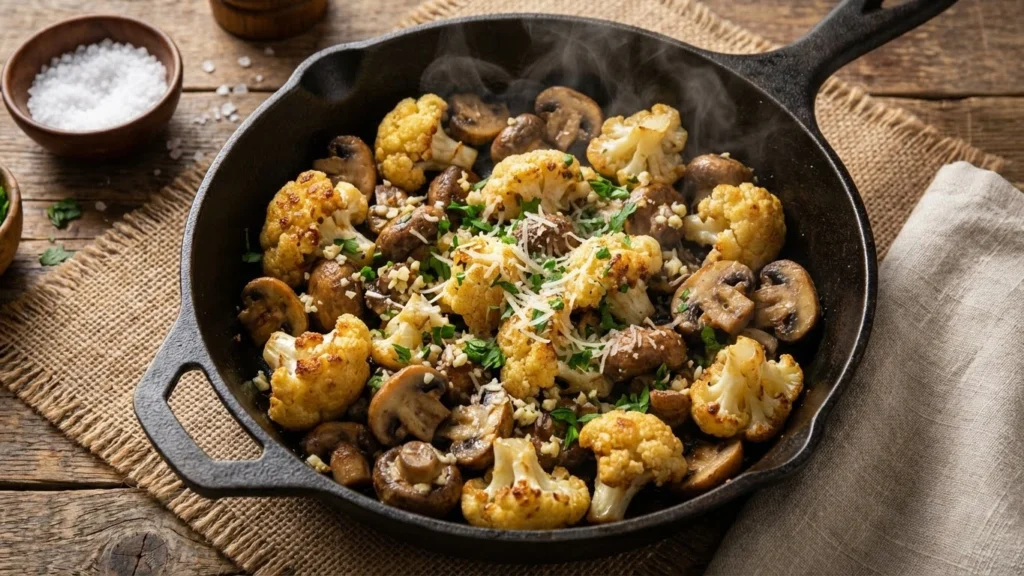
Did you know that 73% of home cooks abandon complex recipes halfway through due to overwhelming cleanup requirements? Enter the Garlic Cauliflower Mushroom Skillet—a revolutionary one-pan dish that delivers restaurant-quality flavors without the kitchen chaos. This garlic cauliflower mushroom skillet combines the earthy richness of sautéed mushrooms with the nutty sweetness of caramelized cauliflower… all tied together with aromatic garlic that transforms simple vegetables into a culinary masterpiece. Whether you’re a busy professional seeking weeknight dinner solutions or a health-conscious foodie exploring plant-based options, this versatile skillet recipe proves that minimal effort can yield maximum flavor. The beauty of this garlic-infused vegetable medley lies not just in its simplicity, but in its remarkable ability to serve as a standalone meal, a sophisticated side dish, or a nutrient-dense base for proteins.
Whether you’re new to cooking or a seasoned chef, this garlic cauliflower mushroom skillet will quickly become your go-to recipe for effortless, healthy meals.
Ingredients List
Before you begin making your garlic cauliflower mushroom skillet, gather these simple, wholesome ingredients that create magic together in one pan.
For the Main Skillet:
- 1 medium head of cauliflower (approximately 2 pounds), cut into bite-sized florets
- 16 ounces mixed mushrooms (cremini, shiitake, or button), cleaned and sliced
- 6 cloves fresh garlic, minced (substitute: 2 teaspoons garlic powder or 1 tablespoon roasted garlic paste)
- 3 tablespoons extra virgin olive oil (substitute: avocado oil, ghee, or vegan butter)
- 1 tablespoon unsalted butter (optional for extra richness; use vegan butter for dairy-free)
- ½ teaspoon red pepper flakes (adjust to taste)
- 1 teaspoon smoked paprika
- ½ teaspoon dried thyme (substitute: fresh thyme sprigs)
- Sea salt and freshly cracked black pepper to taste
For Finishing:
- 2 tablespoons fresh parsley, finely chopped (substitute: cilantro or basil)
- 1 tablespoon fresh lemon juice
- ¼ cup grated Parmesan cheese (optional; use nutritional yeast for vegan option)
- Toasted pine nuts or slivered almonds for garnish
Pro Tip: Select cauliflower with tightly packed, creamy-white florets and mushrooms that feel firm and dry to the touch—moisture indicates age and compromises that perfect golden sear.
Timing
This garlic cauliflower mushroom skillet clocks in at just 30 minutes from start to finish—approximately 40% faster than traditional roasted vegetable dishes. The beauty of the garlic cauliflower mushroom skillet method is that it delivers superior caramelization while preserving more nutrients.
Preparation Time: 12 minutes
Cooking Time: 18 minutes
Total Time: 30 minutes
This garlic cauliflower mushroom skillet clocks in at just 30 minutes from start to finish—approximately 40% faster than traditional roasted vegetable dishes that require oven preheating and extended cooking times. The skillet method delivers superior caramelization while preserving more nutrients compared to high-heat roasting, making it both time-efficient and nutritionally advantageous.
Step-by-Step Instructions
Return the seared cauliflower to the skillet to complete your garlic cauliflower mushroom skillet. Toss everything together, ensuring the vegetables are evenly coated with the aromatic garlic-herb mixture.
Step 1: Prepare Your Vegetables
Wash and thoroughly dry the cauliflower, then cut into uniform florets roughly 1-1.5 inches in size. Consistent sizing ensures even cooking and prevents some pieces from burning while others remain undercooked. Clean mushrooms with a damp paper towel rather than rinsing them under water—mushrooms are like sponges and excess moisture prevents that coveted golden-brown crust.
Step 2: Heat Your Skillet to Perfection
Place a large cast-iron or stainless steel skillet (12-inch diameter works best) over medium-high heat. Add 2 tablespoons of olive oil and let it shimmer—this visual cue indicates the oil has reached optimal temperature (around 375°F) for proper searing without burning.
Step 3: Sear the Cauliflower
Add cauliflower florets to the hot skillet in a single layer, working in batches if necessary to avoid overcrowding. Let them sit undisturbed for 4-5 minutes until the undersides develop rich, golden-brown caramelization. Toss and continue cooking for another 3-4 minutes until tender-crisp. Transfer to a plate and set aside.
Step 4: Cook the Mushrooms
Add the remaining tablespoon of olive oil and optional butter to the same skillet. Add sliced mushrooms and resist the urge to stir immediately—let them release their moisture and develop a beautiful sear for 5-6 minutes. Season with salt and pepper, stirring occasionally until they’re golden and their liquid has evaporated.
Step 5: Build the Flavor Foundation
Reduce heat to medium. Add minced garlic, red pepper flakes, smoked paprika, and thyme to the mushrooms. Stir continuously for 60-90 seconds until the garlic becomes fragrant but not browned—burned garlic turns bitter and compromises the entire dish.
Step 6: Bring It All Together
Return the seared cauliflower to the skillet. Toss everything together, ensuring the vegetables are evenly coated with the aromatic garlic-herb mixture. Cook for an additional 2-3 minutes, allowing the flavors to meld while maintaining the vegetables’ textural integrity.
Step 7: Finish with Brightness
Remove from heat and immediately drizzle with fresh lemon juice. The acidity brightens the earthy flavors and adds a restaurant-quality finish. Garnish with fresh parsley, optional Parmesan cheese, and toasted nuts. Serve immediately while the vegetables maintain their optimal texture. Your garlic cauliflower mushroom skillet is now ready to serve! Remove from heat and immediately drizzle with fresh lemon juice.
Nutritional Information
One serving of this garlic cauliflower mushroom skillet provides impressive nutritional benefits without compromising on taste.
Per Serving (serves 4):
- Calories: 168
- Total Fat: 12g (15% DV)
- Saturated Fat: 2.5g
- Trans Fat: 0g
- Cholesterol: 5mg (2% DV)
- Sodium: 245mg (11% DV)
- Total Carbohydrates: 14g (5% DV)
- Dietary Fiber: 4.5g (16% DV)
- Sugars: 5g
- Protein: 6g (12% DV)
- Vitamin D: 15% DV
- Vitamin C: 95% DV
- Calcium: 6% DV
- Iron: 8% DV
- Potassium: 18% DV
Notable Health Benefits: This nutrient-dense skillet provides nearly your entire daily requirement of vitamin C, supporting immune function and collagen production. The selenium-rich mushrooms offer powerful antioxidant properties, while cauliflower’s glucosinolates have been studied for their potential cancer-preventive compounds.
The garlic cauliflower mushroom skillet proves that healthy eating doesn’t mean sacrificing flavor or satisfaction.
Healthier Alternatives for the Recipe
While the garlic cauliflower mushroom skillet is already nutritious, these modifications can enhance its health benefits even further.
Reduce Oil Content: Use a cooking spray and add vegetable broth (¼ cup) for moisture, reducing the olive oil to just 1 tablespoon. This modification cuts approximately 180 calories from the total recipe without sacrificing flavor.
Boost Protein: Add ½ cup of cooked chickpeas or white beans during the final tossing stage to increase protein content to 10g per serving, making this dish more satiating as a main course.
Lower Sodium Option: Replace salt with herbs like rosemary, oregano, and a squeeze of lemon—citrus naturally enhances perceived saltiness, allowing you to reduce sodium by up to 50%.
Add Greens: Incorporate 2 cups of fresh spinach or kale during the last 2 minutes of cooking for added fiber, iron, and vitamins K and A without significantly altering the flavor profile.
Grain-Free Cauliflower Rice Base: Pulse half the cauliflower into rice-sized pieces before cooking for a heartier, grain-free base that increases volume and creates textural variety.
These variations ensure your garlic cauliflower mushroom skillet adapts perfectly to your dietary needs and preferences.
Serving Suggestions
As a Main Course: Serve this garlic cauliflower mushroom skillet over creamy polenta, quinoa, or cauliflower rice for a complete plant-based meal. Top with a fried or poached egg for added richness and 6g of high-quality protein.
Protein Pairings: This versatile side complements grilled chicken breast, pan-seared salmon, or herb-crusted pork tenderloin beautifully. The earthy vegetables balance richer proteins without overwhelming delicate flavors.
Pasta Integration: Toss with your favorite pasta shape (orecchiette works wonderfully), reserved pasta water, and extra Parmesan for an elevated vegetarian pasta dish that’s ready in under 30 minutes.
Buddha Bowl Component: Use as the warm vegetable base for a nourishing bowl alongside hummus, roasted chickpeas, fresh greens, and tahini dressing.
Brunch Transformation: Reheat leftovers and serve topped with avocado slices and everything bagel seasoning for a satisfying, Instagram-worthy breakfast that takes minutes to assemble.
Wine Pairing Recommendation: The earthy mushrooms and garlic pair exceptionally well with a crisp Sauvignon Blanc or a light-bodied Pinot Noir that won’t overpower the vegetables’ subtle sweetness.
Common Mistakes to Avoid
Overcrowding the Pan: The number one culprit behind soggy vegetables is overcrowding. When vegetables touch, they steam rather than sear. Use a large skillet (12+ inches) or cook in batches to ensure proper caramelization.
Skipping the Dry Step: Wet vegetables cannot brown properly. Pat cauliflower and mushrooms completely dry with paper towels before cooking—this simple step dramatically improves texture and flavor development.
Stirring Too Frequently: Patience yields perfection. Let vegetables sit undisturbed long enough to develop that golden crust. Constant stirring prevents the Maillard reaction, which creates complex, savory flavors.
Adding Garlic Too Early: Garlic burns quickly at high heat, turning bitter and acrid. Always add it toward the end when the heat has been reduced, and cook just until fragrant—typically 60-90 seconds.
Using Pre-Minced Garlic: Fresh garlic contains volatile compounds that dissipate quickly after cutting. Pre-minced garlic from jars lacks the pungent intensity needed for this garlic-forward dish. Invest two minutes in mincing fresh cloves for exponentially better results.
Underseasoning: Vegetables require generous seasoning. Season in layers—lightly during cooking, then adjust at the end. Taste before serving and don’t be afraid to add that extra pinch of salt or squeeze of lemon.
Storing Tips for the Recipe
Refrigeration: Store cooled garlic cauliflower mushroom skillet in an airtight container for up to 4 days. The flavors actually intensify overnight, making leftovers particularly delicious.
Freezing Guidelines: While possible, freezing isn’t recommended as the cauliflower texture becomes softer upon thawing. If you must freeze, slightly undercook the vegetables and store for up to 2 months in freezer-safe containers.
Reheating Methods: Reheat in a skillet over medium heat with a splash of water or broth to revive moisture and texture. Avoid microwaving if possible—it creates steam that makes vegetables mushy. An air fryer (380°F for 4-5 minutes) works exceptionally well for restoring that slightly crispy exterior.
Meal Prep Strategy: Prep vegetables up to 2 days in advance. Store cut cauliflower and sliced mushrooms separately in the refrigerator, then cook fresh when needed. Pre-minced garlic can be stored in olive oil for up to 3 days.
Leftover Transformation: Blend leftover skillet vegetables with vegetable broth and cream for a luxurious mushroom-cauliflower soup, or chop finely and use as a savory filling for omelets, quesadillas, or stuffed bell peppers.
Conclusion
This garlic cauliflower mushroom skillet masterfully demonstrates that exceptional flavor doesn’t require complicated techniques or endless ingredients. In just 30 minutes, you’ll create a nutrient-dense, versatile dish featuring caramelized vegetables, aromatic garlic, and satisfying umami depth. Whether serving as a weeknight side dish or transforming it into a complete meal, this one-pan wonder delivers restaurant-quality results with minimal cleanup. The combination of vitamin-rich cauliflower and antioxidant-packed mushrooms creates a health-conscious option without sacrificing taste.
Ready to transform your dinner routine? Try this garlic cauliflower mushroom skillet tonight and share your experience in the comments below! We’d love to hear about your favorite variations or serving suggestions. Don’t forget to leave a review and subscribe to our blog for more simple, nutritious recipes that bring joy to your kitchen. Your feedback helps us create content that truly serves your culinary needs!
FAQs
Q: Can I use frozen cauliflower for this recipe?
A: While fresh cauliflower yields the best texture and caramelization, frozen can work in a pinch. Thaw completely and pat extremely dry with paper towels to remove excess moisture. Expect slightly softer results and add 2-3 minutes to the cooking time.
Q: What’s the best mushroom variety to use?
A: Cremini (baby bella) mushrooms offer the best balance of flavor, texture, and affordability. For deeper umami, try a mix including shiitake or oyster mushrooms. Avoid delicate varieties like enoki, which don’t hold up to high-heat cooking.
Q: How do I make this recipe vegan?
A: Simply substitute the butter with additional olive oil or vegan butter, and replace Parmesan with nutritional yeast (use 2-3 tablespoons for a similar savory, cheesy flavor). All other ingredients are naturally plant-based.
Q: Can I add other vegetables to this skillet?
A: Absolutely! Bell peppers, zucchini, cherry tomatoes, or green beans make excellent additions. Add harder vegetables like peppers with the cauliflower, and softer ones like tomatoes during the final 2 minutes to prevent overcooking.
Q: My cauliflower turned mushy. What went wrong?
A: Mushiness typically results from overcrowding the pan (causing steaming), using wet vegetables, or overcooking. Ensure your skillet is large enough, vegetables are thoroughly dried, and cook only until tender-crisp with visible browning.
Q: Is this recipe keto-friendly?
A: Yes! This garlic cauliflower mushroom skillet is naturally low-carb with only 14g net carbohydrates per serving (9.5g when subtracting fiber). It fits perfectly into ketogenic meal plans, especially when served alongside high-fat proteins.
Q: Can I make this ahead for meal prep?
A: Yes, though the texture is best when freshly made. For meal prep, slightly undercook the vegetables so they don’t become too soft when reheated. Store in divided containers and reheat individual portions in a skillet or air fryer rather than the microwave for optimal texture.