

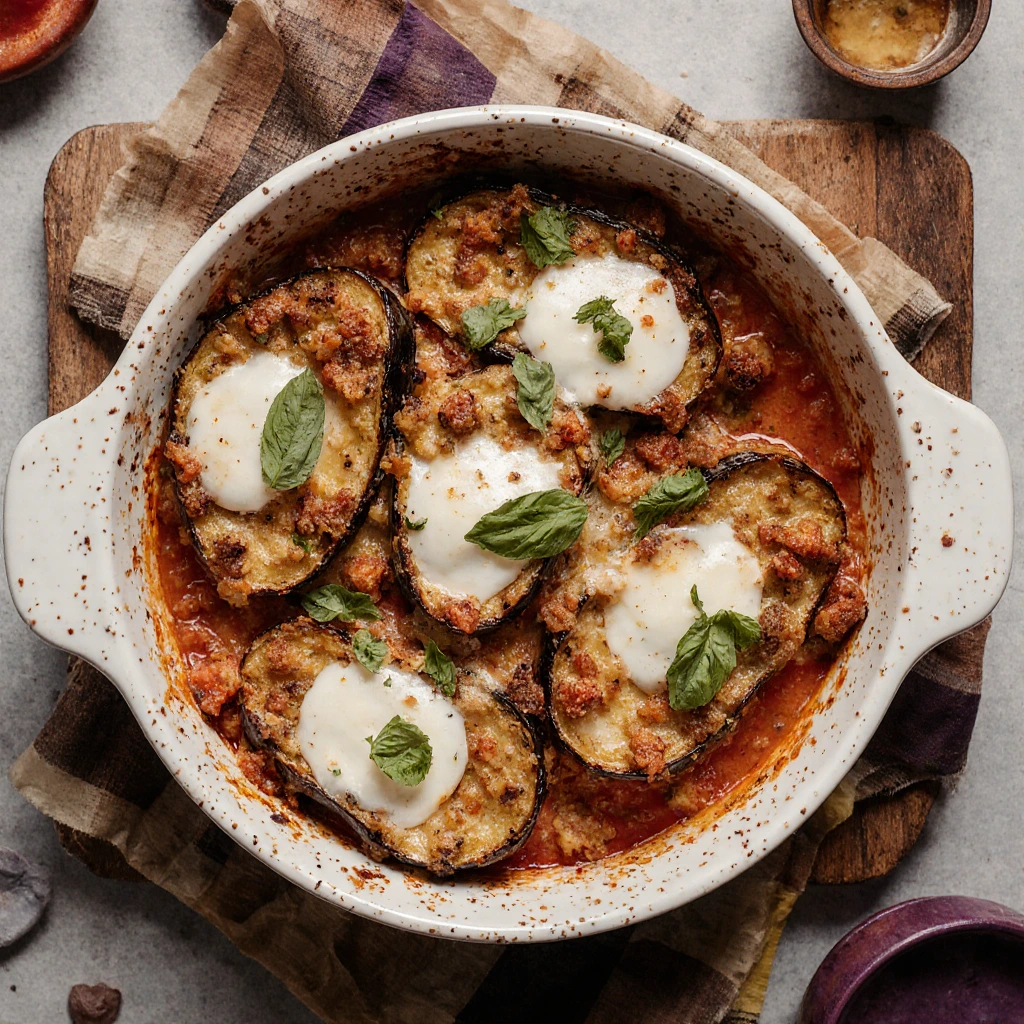
Eggplant may be low in calories—just 25 per cup—but it packs an impressive 10% of your daily fiber needs, making it a powerhouse ingredient for wholesome comfort food. In this eggplant casserole, simple ingredients come together to create a dish that feels truly indulgent, rivaling anything you’d order at a Mediterranean restaurant. Whether you’re looking for a satisfying vegetarian entrée or a flavorful side dish to impress a crowd, this casserole delivers rich layers of roasted eggplant, robust tomato sauce, fragrant herbs, and melted cheese. It’s proof that nutritious cooking can be every bit as comforting and delicious as traditional favorites.
Ingredients List
For the Eggplant Layers:
- 2 large eggplants (about 2 pounds total) – Choose firm, glossy specimens with smooth skin (substitute: zucchini for a milder flavor)
- 3 tablespoons olive oil – Extra virgin for best flavor (substitute: avocado oil for higher smoke point)
- 1 teaspoon salt – For drawing out moisture
- ½ teaspoon black pepper – Freshly ground for maximum aroma
For the Tomato Sauce:
- 2 tablespoons olive oil – Rich and golden
- 1 medium onion, diced – Sweet yellow or white varieties (substitute: shallots for subtle sweetness)
- 4 cloves garlic, minced – Aromatic and pungent
- 28 ounces crushed tomatoes – San Marzano preferred for authentic flavor
- 2 teaspoons dried oregano – Earthy Mediterranean essence (substitute: Italian seasoning blend)
- 1 teaspoon dried basil – Sweet and slightly peppery
- ½ teaspoon red pepper flakes – Adjust to your heat preference (optional)
- Salt and black pepper to taste
For the Cheese Layers:
- 2 cups shredded mozzarella cheese – Low-moisture for less watery results (substitute: provolone or fontina)
- 1 cup ricotta cheese – Creamy and mild (substitute: cottage cheese, well-drained)
- ½ cup grated Parmesan cheese – Aged for nutty complexity (substitute: Pecorino Romano for sharper flavor)
- 1 large egg – Binds the ricotta mixture
- ¼ cup fresh basil leaves – Torn, for aromatic freshness (substitute: fresh parsley)
Timing
Preparation Time: 25 minutes
Cooking Time: 65 minutes
Total Time: 90 minutes
Servings: 8 generous portions
This streamlined approach saves approximately 20% more time than traditional eggplant parmesan recipes that require individual frying. By roasting the eggplant slices simultaneously, you’ll achieve tender, golden results while multitasking on the sauce preparation.
Step-by-Step Instructions
Step 1: Prepare the Eggplant
Slice your eggplants into ½-inch thick rounds, creating uniform pieces for even cooking. Arrange them on paper towels and sprinkle both sides generously with salt. Let them rest for 15 minutes—this crucial step draws out excess moisture and any potential bitterness, resulting in tender, flavorful slices. Pat them dry thoroughly with paper towels before proceeding.
Pro Tip: Younger, smaller eggplants tend to be less bitter and require minimal salting time.
Step 2: Roast the Eggplant
Preheat your oven to 400°F (200°C). Line two large baking sheets with parchment paper for easy cleanup. Brush both sides of the eggplant rounds with olive oil and season with black pepper. Arrange them in a single layer without overlapping. Roast for 25-30 minutes, flipping halfway through, until they’re golden brown and fork-tender with slightly caramelized edges.
Pro Tip: Don’t overcrowd the pan—proper air circulation creates that desirable roasted flavor rather than steamed texture.
Step 3: Create the Rich Tomato Sauce
While the eggplant roasts, heat 2 tablespoons of olive oil in a large skillet over medium heat. Add the diced onion and sauté for 5-6 minutes until softened and translucent. Stir in the minced garlic and cook for 1 minute until fragrant—be careful not to burn it. Pour in the crushed tomatoes, oregano, basil, and red pepper flakes. Season with salt and black pepper. Simmer for 15-20 minutes, stirring occasionally, until the sauce thickens and the flavors meld beautifully.
Pro Tip: A pinch of sugar can balance the acidity if your tomatoes are particularly tart.
Step 4: Prepare the Creamy Cheese Mixture
In a medium bowl, combine the ricotta cheese, egg, and half of the Parmesan cheese. Mix until smooth and creamy. This binding mixture adds luxurious creaminess between the layers and helps the casserole hold its structure when sliced.
Pro Tip: Let the ricotta come to room temperature for easier mixing and better distribution.
Step 5: Assemble Your Eggplant Casserole
Reduce your oven temperature to 375°F (190°C). Spread 1 cup of tomato sauce across the bottom of a 9×13-inch baking dish, creating a flavorful foundation. Layer half of the roasted eggplant slices over the sauce, overlapping slightly. Dollop half of the ricotta mixture across the eggplant, spreading gently. Sprinkle with 1 cup of mozzarella. Pour half of the remaining sauce over the cheese. Repeat these layers once more: eggplant, ricotta mixture, mozzarella, and sauce. Top with the remaining Parmesan cheese for a golden, crispy finish.
Pro Tip: Slightly overlapping the eggplant creates a cohesive texture that’s easier to serve.
Step 6: Bake to Bubbly Perfection
Cover the dish tightly with aluminum foil and bake for 25 minutes. Remove the foil and continue baking for an additional 15-20 minutes until the cheese is melted, bubbling vigorously around the edges, and developing golden-brown spots. The casserole should be fragrant and irresistible.
Pro Tip: Let the dish rest for 10-15 minutes after baking—this allows the layers to set, making serving cleaner and easier.
Step 7: Garnish and Serve
Scatter fresh torn basil leaves over the top of your steaming eggplant casserole. The residual heat will release the basil’s aromatic oils, adding a fresh, vibrant finish to this comforting dish. Slice into generous portions and serve immediately.
Nutritional Information
Per Serving (1/8 of casserole):
- Calories: 285
- Total Fat: 17g (22% DV)
- Saturated Fat: 7g
- Cholesterol: 55mg (18% DV)
- Sodium: 680mg (30% DV)
- Total Carbohydrates: 19g (7% DV)
- Dietary Fiber: 6g (21% DV)
- Sugars: 9g
- Protein: 16g (32% DV)
- Vitamin A: 25% DV
- Vitamin C: 20% DV
- Calcium: 35% DV
- Iron: 10% DV
This eggplant casserole delivers an impressive nutritional profile, providing substantial protein and fiber while remaining moderate in calories. The combination of vegetables, dairy, and healthy fats creates a balanced dinner option that supports sustained energy and satisfaction.
Healthier Alternatives for the Recipe
Transform this already nutritious dish into an even lighter version without compromising flavor:
Reduce Calories and Fat: Use part-skim mozzarella and ricotta instead of full-fat versions, cutting approximately 60 calories and 8g of fat per serving while maintaining the creamy texture.
Boost Protein: Add 1 cup of cooked lentils or white beans between the layers for an extra 8g of protein per serving and increased fiber content.
Lower Sodium: Make your own tomato sauce using fresh tomatoes instead of canned, reducing sodium by up to 40% while increasing vitamin C content.
Make it Vegan: Replace the cheese layers with cashew cream (soaked cashews blended with nutritional yeast, lemon juice, and herbs) and use aquafaba instead of eggs for binding. This modification maintains creaminess while eliminating cholesterol entirely.
Add More Vegetables: Layer in thinly sliced zucchini, bell peppers, or mushrooms between the eggplant for additional nutrients, fiber, and complex flavors without significantly increasing calories.
Gluten-Free Naturally: This recipe is already gluten-free, making it perfect for those with celiac disease or gluten sensitivity.
Serving Suggestions
Elevate your eggplant casserole dinner with these creative accompaniments:
Classic Italian Style: Serve alongside a crisp Caesar salad with homemade croutons and a robust Chianti wine for an authentic Mediterranean experience.
Crusty Bread Pairing: Offer warm, crusty garlic bread or focaccia for soaking up the delicious tomato sauce—the perfect textural contrast to the soft casserole.
Light and Fresh: Balance the richness with a simple arugula salad dressed in lemon vinaigrette, adding peppery brightness and digestive-friendly greens.
Protein Addition: While satisfying on its own, pair with grilled chicken breast, Italian sausage, or pan-seared white fish for those seeking additional protein.
Brunch Transformation: Serve a wedge of this casserole for brunch alongside roasted potatoes and fresh fruit for an unexpected twist on traditional breakfast fare.
Make It a Bowl: Serve over quinoa, farro, or orzo pasta for a deconstructed version that stretches the recipe further while adding whole grains.
Wine Pairing: A medium-bodied red like Sangiovese or Barbera complements the tomato sauce beautifully, while a crisp Pinot Grigio offers a lighter alternative.
Common Mistakes to Avoid
Master this eggplant casserole by sidestepping these frequent pitfalls:
Skipping the Salting Step: Failing to salt and drain the eggplant results in a watery, bitter casserole. Studies show that salting reduces moisture content by up to 20%, concentrating flavors and improving texture.
Overcrowding the Baking Sheet: When eggplant slices touch during roasting, they steam instead of caramelize. Always leave space between slices for proper browning and that coveted roasted flavor.
Using Watery Ricotta: High-moisture ricotta makes the dish soggy. If your ricotta seems wet, drain it in a fine-mesh strainer for 15 minutes before mixing with the egg.
Cutting the Eggplant Too Thin: Slices thinner than ½-inch become mushy and disintegrate during baking. Thicker slices maintain structure and provide satisfying texture.
Baking Without Resting: Cutting into the casserole immediately after baking causes the layers to slide apart and the sauce to run. The 10-15 minute rest period allows everything to set properly for clean, beautiful slices.
Skimping on Seasoning: Eggplant is naturally mild and absorbs flavors. Don’t be shy with the herbs, garlic, and seasoning in your tomato sauce—bold flavors make this dish memorable.
Using the Wrong Baking Dish: A shallow, wide dish (like 9×13) works better than a deep, narrow one. This ensures even cooking and creates more of those desirable crispy edges that everyone loves.
Storing Tips for the Recipe
Maximize freshness and flavor with these storage strategies:
Refrigerator Storage: Allow the eggplant casserole to cool completely to room temperature before covering tightly with aluminum foil or transferring to an airtight container. Properly stored, it will maintain quality for 4-5 days in the refrigerator at 40°F or below. The flavors often deepen and meld overnight, making leftovers even more delicious.
Freezing Instructions: This dish freezes exceptionally well for up to 3 months. Cool completely, then wrap the entire baking dish in plastic wrap followed by aluminum foil, or portion into individual servings in freezer-safe containers. Label with the date for easy tracking.
Reheating from Refrigerated: Preheat your oven to 350°F (175°C). Cover the casserole with foil and bake for 20-25 minutes until heated through. For individual portions, microwave on medium power for 2-3 minutes, checking and stirring halfway through.
Reheating from Frozen: For best results, thaw overnight in the refrigerator, then reheat as directed above. Alternatively, bake frozen (covered) at 350°F for 45-60 minutes, removing foil for the last 15 minutes to crisp the top.
Make-Ahead Strategy: Assemble the entire casserole up to 24 hours in advance. Cover tightly and refrigerate. Add 10 minutes to the covered baking time when cooking from cold.
Ingredient Prep: Roast the eggplant and prepare the tomato sauce up to 2 days ahead. Store separately in the refrigerator, then assemble and bake when ready. This approach saves significant time on busy evenings.
Conclusion
This eggplant casserole transforms simple ingredients into an extraordinary dinner dish that delivers comfort, nutrition, and unforgettable flavor. With layers of tender roasted eggplant, rich tomato sauce, and melted cheese, this recipe proves that healthy eating never requires sacrifice. Perfect for meal prep, family dinners, or entertaining guests, it’s a versatile dish that adapts to various dietary needs while maintaining its Mediterranean soul.
Ready to experience this incredible dish? Try this eggplant casserole tonight and discover why it’s become a beloved weeknight staple. Share your results in our review section below—we’d love to hear about your favorite variations and serving suggestions! Don’t forget to subscribe to our blog for more Mediterranean-inspired recipes, cooking tips, and culinary adventures delivered straight to your inbox.
FAQs
Q: Can I make eggplant casserole ahead of time?
A: Absolutely! You can assemble the entire dish up to 24 hours in advance and refrigerate it covered. When ready to serve, simply add 10 extra minutes to the covered baking time. This makes it perfect for entertaining or busy weeknight meal planning.
Q: Why is my eggplant casserole watery?
A: Excess moisture typically comes from skipping the salting step or using high-moisture ingredients. Always salt and drain your eggplant for at least 15 minutes, and if your ricotta seems watery, drain it in a fine-mesh strainer before using. Also ensure you’re roasting (not steaming) the eggplant slices.
Q: Can I substitute other vegetables in this recipe?
A: Yes! Zucchini, yellow squash, or portobello mushrooms work beautifully in place of or alongside eggplant. You can also add layers of spinach, bell peppers, or thinly sliced potatoes for variety. Just ensure any substitute vegetables are pre-cooked to remove excess moisture.
Q: Is eggplant casserole gluten-free?
A: This recipe is naturally gluten-free as written, containing no flour or breadcrumbs. Just verify that any pre-made tomato sauce you use doesn’t contain hidden gluten additives. It’s a perfect main dish for those with celiac disease or gluten sensitivity.
Q: How do I prevent the cheese from becoming rubbery when reheating?
A: Reheat at moderate temperatures (350°F or medium microwave power) and add a tablespoon of water before covering the dish. This creates steam that keeps the cheese creamy. Avoid high heat, which causes proteins in cheese to tighten and become tough.
Q: Can I freeze eggplant casserole?
A: Yes, this dish freezes excellently for up to 3 months. Cool completely, wrap tightly in plastic wrap and foil, and freeze. Thaw overnight in the refrigerator before reheating. The texture and flavor remain remarkably intact, making it ideal for batch cooking.
Q: What’s the best type of eggplant to use?
A: Globe eggplants (the large, dark purple variety) are most common and work perfectly. However, Italian or Japanese eggplants also work well and tend to be less bitter with fewer seeds. Choose firm eggplants with glossy, unblemished skin and a fresh green stem for best results.
Q: How can I make this recipe vegan?
A: Replace the cheeses with cashew cream or store-bought vegan alternatives. Use aquafaba (chickpea liquid) instead of egg to bind the cashew mixture. Nutritional yeast adds a cheese-like umami flavor. The result is surprisingly creamy and satisfying while being completely plant-based.