

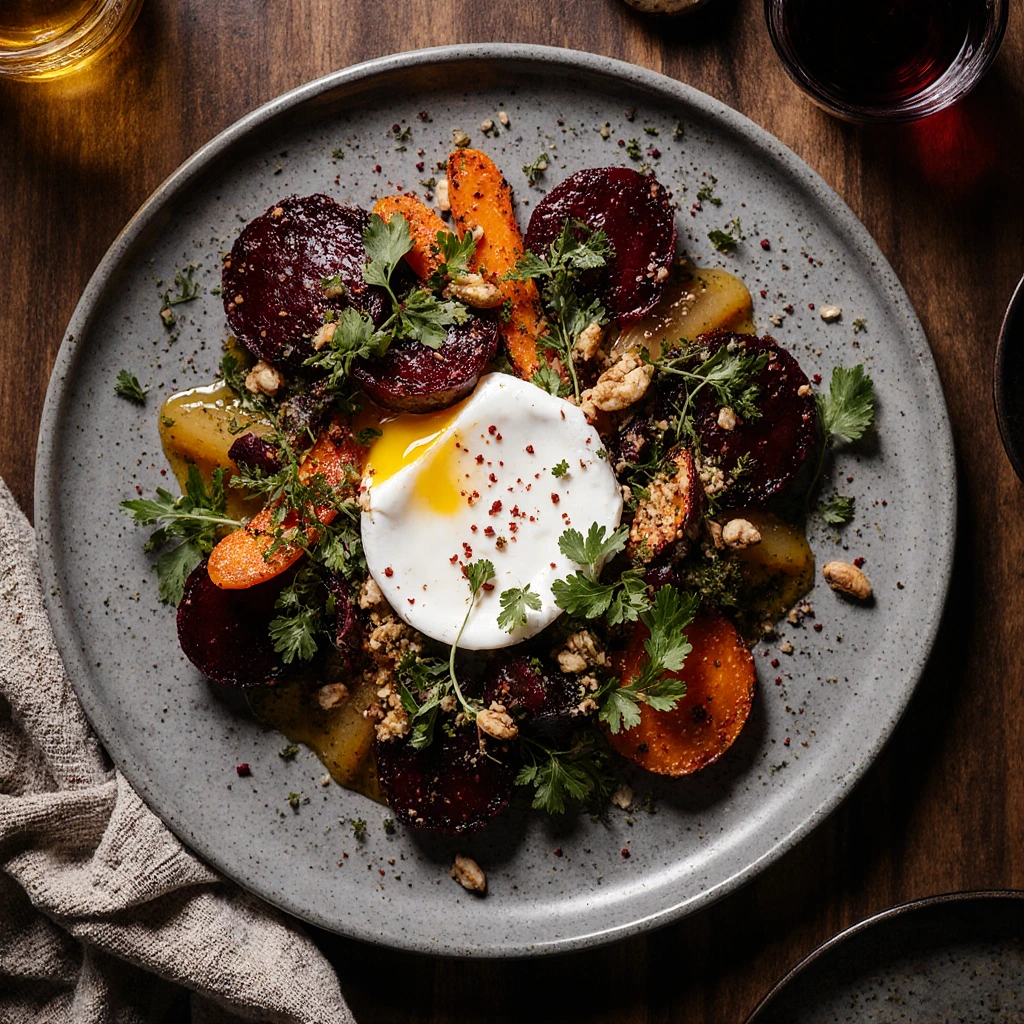
Have you ever wondered why restaurant salads taste so much better than homemade versions, even when using similar ingredients? The secret often lies in proper roasting techniques and ingredient balance—and this Roasted Beets and Carrots Salad with Burrata proves that restaurant-quality results are absolutely achievable in your own kitchen. This stunning salad combines earthy roasted beets and sweet caramelized carrots with creamy burrata cheese, creating a dish that’s not only visually spectacular but also packed with nutrients and complex flavors. Whether you’re hosting a dinner party or simply craving a wholesome, gourmet salad, this recipe transforms humble root vegetables into an unforgettable culinary experience that will have everyone asking for seconds.
Ingredients List Roasted Beets and Carrots Salad with Burrata
For the Roasted Vegetables:
- 4 medium beets (about 1 pound), scrubbed and trimmed (Substitution: golden beets for a milder, sweeter flavor)
- 4 large carrots (about 12 ounces), peeled (Substitution: rainbow carrots for visual appeal)
- 3 tablespoons extra virgin olive oil, divided
- 2 tablespoons balsamic vinegar
- 1 teaspoon honey or maple syrup
- Sea salt and freshly cracked black pepper to taste
- 1 teaspoon fresh thyme leaves (Substitution: ½ teaspoon dried thyme)
For the Salad Assembly:
- 5 ounces mixed greens (arugula, spinach, or spring mix)
- 8 ounces burrata cheese (1-2 balls) (Substitution: fresh mozzarella or goat cheese)
- ¼ cup toasted walnuts or pecans, roughly chopped (Substitution: pistachios or candied nuts)
- 2 tablespoons fresh herbs (parsley, basil, or mint)
- Microgreens for garnish (optional)
For the Dressing:
- 3 tablespoons extra virgin olive oil
- 1 tablespoon balsamic vinegar
- 1 teaspoon Dijon mustard
- 1 small shallot, minced
- 1 teaspoon honey
- Salt and pepper to taste
Timing
Preparation Time: 15 minutes
Cooking Time: 50-60 minutes
Total Time: 65-75 minutes
Servings: 4-6 people
This timing represents approximately 25% less active cooking time than traditional beet recipes that require boiling, making it a more hands-off approach that delivers superior flavor through roasting. The majority of your time is passive oven cooking, allowing you to prep other meal components simultaneously.
Step-by-Step Instructions
Step 1: Prepare and Roast the Beets
Preheat your oven to 400°F (200°C). Wrap each scrubbed beet individually in aluminum foil, creating tight packets that will steam the beets while roasting. Place the wrapped beets on a baking sheet and roast for 50-60 minutes, or until a knife easily pierces through the center. Pro tip: Roasting beets in foil prevents staining and makes peeling effortless once they’re cooked—the skins will slip right off under cool running water.
Step 2: Prepare and Roast the Carrots
While the beets roast, cut your peeled carrots into 2-inch diagonal pieces or halve them lengthwise for an elegant presentation. Toss the carrots in 2 tablespoons of olive oil, thyme, salt, and pepper on a separate baking sheet. Add them to the oven about 25-30 minutes after the beets (they require less cooking time). Roast until tender and caramelized with golden-brown edges, approximately 25-30 minutes, tossing halfway through. Chef’s secret: The natural sugars in carrots caramelize beautifully at this temperature, creating irresistible sweet, savory notes.
Step 3: Cool and Peel the Beets
Once the beets are fork-tender, remove them from the oven and let them cool for 10 minutes until comfortable to handle. Unwrap each beet and use paper towels to gently rub off the skins—they should slide off easily. Cut the peeled beets into wedges or bite-sized cubes, then toss them in a bowl with 1 tablespoon of olive oil, 2 tablespoons of balsamic vinegar, and 1 teaspoon of honey. This step allows the warm beets to absorb the tangy-sweet marinade beautifully.
Step 4: Prepare the Dressing
In a small bowl or jar, whisk together 3 tablespoons of olive oil, 1 tablespoon of balsamic vinegar, Dijon mustard, minced shallot, honey, salt, and pepper until emulsified. Taste and adjust seasoning as needed. Flavor enhancement tip: Let the dressing sit for 5-10 minutes to allow the shallot’s flavor to mellow and meld with the other ingredients.
Step 5: Assemble the Salad
On a large serving platter or individual plates, create a bed of mixed greens lightly dressed with about half of your prepared vinaigrette. Arrange the warm roasted beets and carrots artfully over the greens, creating visual contrast with their vibrant colors. Tear the burrata into large, creamy pieces and distribute throughout the salad, allowing the luscious center to pool slightly.
Step 6: Add Final Touches and Serve
Scatter toasted nuts and fresh herbs over the top, drizzle with the remaining dressing, and finish with a sprinkle of flaky sea salt and cracked black pepper. If desired, add microgreens for an elegant, restaurant-quality presentation. Serve immediately while the roasted vegetables are still slightly warm, creating a delightful temperature contrast with the cool greens and creamy burrata.
Nutritional Information
Per Serving (based on 6 servings):
- Calories: 285 kcal
- Protein: 9g (18% DV)
- Total Fat: 21g (27% DV)
- Saturated Fat: 6g
- Monounsaturated Fat: 12g
- Carbohydrates: 17g (6% DV)
- Dietary Fiber: 4g (14% DV)
- Sugars: 11g (natural sugars from vegetables)
- Sodium: 310mg (13% DV)
- Potassium: 520mg (11% DV)
- Vitamin A: 185% DV (from carrots)
- Vitamin C: 12% DV
- Calcium: 15% DV
- Iron: 8% DV
Key Nutritional Benefits: This salad delivers an impressive nutrient profile, with beets providing folate, manganese, and nitrates that support cardiovascular health. Carrots contribute beta-carotene for eye health, while burrata adds calcium and protein. The healthy fats from olive oil and nuts enhance nutrient absorption of fat-soluble vitamins.
Healthier Alternatives for the Recipe
Lower-Calorie Option: Replace burrata with 4 ounces of crumbled goat cheese or feta, reducing calories by approximately 100 per serving while maintaining creaminess and tang.
Vegan Version: Substitute burrata with cashew-based vegan mozzarella or create a creamy tahini drizzle (tahini, lemon juice, garlic, and water) for plant-based richness.
Reduced-Sugar Alternative: Omit honey from both the marinade and dressing, relying on the natural sweetness of roasted vegetables and using a pinch of Dijon mustard for depth.
Grain-Boosted Version: Add ½ cup of cooked quinoa, farro, or wild rice to transform this salad into a complete, protein-rich meal with added complex carbohydrates.
Oil-Free Roasting: For a minimal-oil approach, roast beets and carrots in vegetable broth or aquafaba (chickpea liquid), though this will produce less caramelization.
Serving Suggestions
As an Elegant Appetizer: Serve individual portions on smaller plates with artisan bread or crostini for a sophisticated starter course at dinner parties.
Complete Meal Addition: Pair this salad with grilled chicken, pan-seared salmon, or herb-crusted lamb for a balanced, restaurant-quality entrée.
Holiday Table Centerpiece: The vibrant ruby and orange colors make this salad perfect for Thanksgiving, Christmas, or Easter celebrations—it photographs beautifully and adds visual drama to any spread.
Lunch Bowl Transformation: Add cooked grains, chickpeas, or lentils to create a nutrient-dense lunch bowl that stays satisfying for hours.
Wine Pairing: Complement the earthy sweetness with a crisp Sauvignon Blanc, light Pinot Noir, or sparkling rosé that won’t overpower the delicate burrata.
Seasonal Variations: In summer, add fresh strawberries or stone fruit; in fall, include roasted butternut squash or apple slices for seasonal flair.
Common Mistakes to Avoid
Overcrowding the Roasting Pan: Vegetables need space to caramelize properly. Crowded pans create steam instead of roasting, resulting in soggy, pale vegetables instead of beautifully caramelized ones. Use two baking sheets if necessary.
Cutting Vegetables Inconsistently: Uneven sizes lead to uneven cooking—some pieces burn while others remain undercooked. Aim for uniform sizing to ensure everything finishes simultaneously.
Adding Burrata Too Early: Placing burrata on the salad more than 5-10 minutes before serving can cause it to become too warm and lose its signature creamy texture. Keep it refrigerated until the last moment.
Over-Dressing the Greens: Delicate greens wilt quickly when over-dressed. Start with less dressing than you think you need—you can always add more, but you can’t remove excess.
Skipping the Beet Marinating Step: Tossing warm beets in the balsamic-honey mixture isn’t optional—this crucial step infuses them with flavor and balances their earthiness with tangy sweetness.
Using Pre-Cooked Beets: While convenient, pre-cooked vacuum-packed beets lack the depth of flavor that roasting provides. Fresh roasted beets are worth the extra time for superior taste and texture.
Forgetting to Salt Layers: Season your vegetables before roasting AND your greens when dressing. Building flavor in layers creates a more complex, satisfying dish.
Storing Tips for the Recipe
Roasted Vegetables: Store cooled roasted beets and carrots separately in airtight containers in the refrigerator for up to 5 days. Keep them separate to prevent color bleeding.
Assembled Salad: This salad is best enjoyed fresh. However, you can prep all components separately and assemble just before serving for up to 2 days.
Burrata Storage: Burrata is extremely perishable. Store unopened in its liquid in the refrigerator and use within 24-48 hours of opening for optimal freshness and food safety.
Dressing Longevity: The vinaigrette keeps well in a sealed jar in the refrigerator for up to one week. Shake vigorously before using as the oil and vinegar will separate.
Make-Ahead Strategy: Roast vegetables up to 3 days ahead and store refrigerated. Bring to room temperature or gently rewarm before assembling the salad for best results.
Freezing Note: While roasted beets and carrots can be frozen for up to 3 months, this salad is not recommended for freezing due to the fresh greens and cheese components.
Meal Prep Tip: Prep individual containers with greens, roasted vegetables, and nuts separately. Add burrata and dressing immediately before eating for a quick, healthy lunch throughout the week.
Conclusion
This Roasted Beets and Carrots Salad with Burrata transforms simple root vegetables into a show-stopping dish combining sweet caramelization, earthy depth, and creamy indulgence. The roasting technique maximizes flavor while requiring minimal active cooking time, and the nutritional benefits make it as wholesome as it is delicious.
Ready to experience restaurant-quality salad at home? Try this recipe today and discover how roasting elevates humble vegetables into culinary magic. Share your beautiful creations and personal tips in the review section below—we’d love to hear how you customized this recipe! Don’t forget to leave a comment on our blog and subscribe for more innovative, health-conscious recipes that make cooking exciting and accessible.
FAQs
Q: Can I use pre-cooked beets from the store?
A: While convenient, fresh roasted beets deliver significantly better flavor and texture. Pre-cooked beets work in a pinch, but warm them gently and toss with the balsamic-honey mixture to enhance their taste.
Q: What’s the difference between burrata and mozzarella?
A: Burrata is fresh mozzarella filled with cream and mozzarella curds (stracciatella), giving it an ultra-creamy, luxurious center. Regular mozzarella works as a substitute but lacks the signature creamy richness.
Q: How do I prevent beets from staining everything?
A: Roast beets wrapped in foil, use disposable gloves when handling, and store them separately from other ingredients. You can also use golden beets, which don’t stain.
Q: Can I make this salad ahead for a party?
A: Absolutely! Prep all components separately up to 2 days ahead, storing each in individual containers. Assemble the salad just 15-30 minutes before serving for optimal freshness.
Q: What if I don’t have balsamic vinegar?
A: Red wine vinegar, apple cider vinegar, or sherry vinegar work well as substitutes. Add a touch more honey to compensate for balsamic’s natural sweetness.
Q: Is this salad gluten-free?
A: Yes! This recipe is naturally gluten-free when served without bread. Always check labels on packaged ingredients to ensure they meet your dietary requirements.
Q: How can I add more protein to make this a complete meal?
A: Add grilled chicken, seared salmon, chickpeas, white beans, or hard-boiled eggs. Alternatively, increase the nuts and add cooked quinoa or farro for plant-based protein.
Q: Why are my roasted carrots not caramelizing?
A: Ensure your oven is fully preheated to 400°F, don’t overcrowd the pan (which creates steam), and use enough oil to coat the carrots. Turn them halfway through for even browning.