

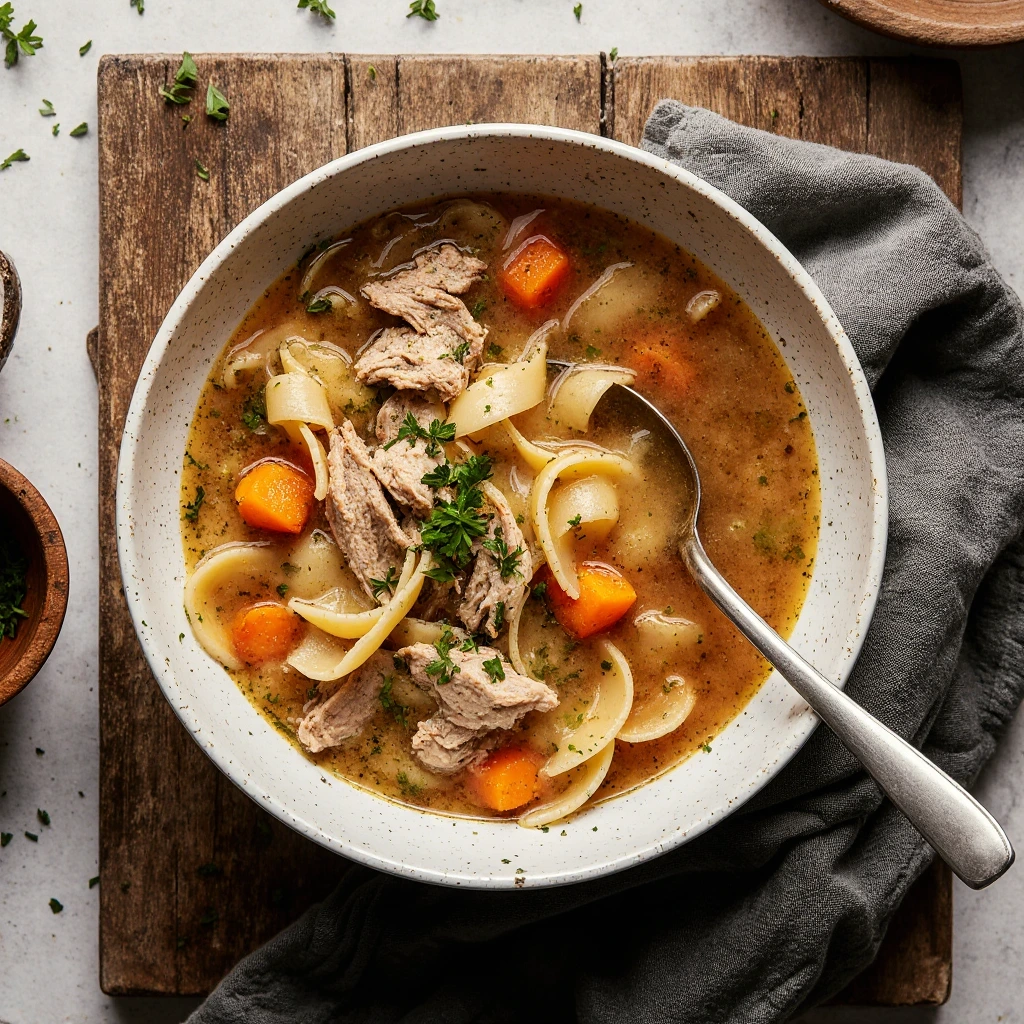
Are you tired of letting perfectly good leftover turkey go to waste after your holiday feast? What if you could transform those leftovers into a comforting, hearty dish loved by the whole family? Turkey noodle soup is a delicious way to not only use up your extra turkey but also to enjoy a warming meal that feels homemade and nourishing. This turkey noodle soup recipe blends savory broth, tender turkey, and soft noodles, creating a meal that feels like a hug in a bowl, perfect for any day of the year.
Ingredients List
To make delicious turkey noodle soup, gather these ingredients that marry fresh flavors with savory depth:
-
3 cups cooked, shredded leftover turkey (dark and white meat combined for rich flavor)
-
2 large carrots, sliced thinly (or substitute with parsnips for a sweeter twist)
-
2 celery stalks, chopped (use fennel for a slight anise aroma)
-
1 medium onion, finely chopped
-
3 cloves garlic, minced
-
6 cups low-sodium chicken or turkey broth (homemade or store-bought)
-
1 teaspoon dried thyme (fresh thyme adds a bright herbal note)
-
1 teaspoon dried parsley flakes (or fresh chopped parsley for garnish)
-
8 ounces egg noodles (substitute with gluten-free or whole wheat noodles)
-
Salt and pepper, to taste
-
2 tablespoons olive oil or butter for sautéing
These ingredients create a symphony of texture and taste — the sweetness of carrots, the aromatic celery, the hearty turkey, and the silky noodles combine beautifully in the soup.
Timing
Preparing this turkey noodle soup is relatively quick and efficient compared to many homemade soups. Here’s the breakdown:
-
Preparation time: 15 minutes (chopping vegetables and shredding turkey)
-
Cooking time: 30 minutes (sautéing, simmering, and cooking noodles)
-
Total time: 45 minutes
This makes it roughly 20-30% faster than traditional slow-cooked soup recipes, meaning you can have a fresh, comforting meal in under an hour without sacrificing flavors.
Step-by-Step Instructions
Step 1: Prepare the Base Vegetables
Begin by placing a large heavy-bottomed pot or Dutch oven over medium heat. Add olive oil or butter and allow it to warm until shimmering. Add diced onions, sliced carrots, and chopped celery. Sauté these aromatics for 6–8 minutes, stirring occasionally. You’re aiming for softened vegetables with slightly golden edges because this caramelization creates a deeper, richer flavor foundation for your Turkey Noodle Soup. Once the vegetables begin to tenderize, add minced garlic and cook for an additional 1 minute to release its full aroma without burning it.
Step 2: Build Your Flavorful Broth
Pour in the chicken or turkey broth, using a wooden spoon to scrape up the browned bits at the bottom of the pot—this adds significant umami depth. Add thyme, parsley, bay leaf, salt, and pepper. Increase the heat slightly to bring the mixture to a gentle boil. This phase jump-starts the infusion of herbs, creating a layered, savory base that elevates even simple leftover turkey.
Step 3: Add the Turkey and Simmer
Fold in the shredded leftover turkey, distributing it evenly throughout the pot. Reduce the heat to medium-low and allow the soup to simmer uncovered for 10–12 minutes. This short simmering time is long enough for the turkey to rehydrate and absorb the flavors of the broth, but not so long that it becomes tough or stringy. Stir occasionally to prevent sticking and ensure even heating.
Step 4: Add the Noodles
Once the broth has developed a cohesive flavor, add the egg noodles directly into the pot. Cook them according to the package instructions, usually 7–10 minutes. Keep in mind that noodles continue to soften slightly even after the heat is off, so if you prefer firmer texture, reduce the cook time by about one minute. Stir frequently during this stage to prevent the noodles from clumping.
Step 5: Taste and Adjust Seasoning
When the noodles are almost done, taste the broth and adjust seasoning as needed. Depending on your broth and turkey, you may need very little salt. If the soup tastes flat, add a small splash of lemon juice to brighten it. For a creamier, more comforting variation, stir in a few tablespoons of heavy cream or half-and-half at this stage, ensuring it blends smoothly without curdling.
Step 6: Enhance With Optional Add-Ins
If you’re including optional ingredients like peas, corn, or greens such as spinach or kale, add them now. Frozen peas and corn only need 2–3 minutes to heat through. Spinach wilts in under a minute, while kale benefits from simmering for 3–5 minutes to soften. These additions increase both nutrition and texture diversity without complicating the recipe.
Step 7: Final Simmer and Balance
Allow the soup to simmer for an additional 2–3 minutes to let all components harmonize. Remove the bay leaf before serving. If your broth tastes too strong, dilute it with a small amount of water. If it feels too thin, let it simmer a few extra minutes to reduce and concentrate.
Step 8: Serve the Soup Hot
Ladle the Turkey Noodle Soup into warm bowls to maintain temperature longer. Garnish with freshly chopped parsley, cracked black pepper, or a touch of grated Parmesan for depth. Serve immediately with crusty bread, rolls, or a crisp side salad. This step completes the transformation of leftover turkey into a comforting, hearty meal that feels freshly made from scratch.
Nutritional Information
This turkey noodle soup is not only soothing but also nutritious:
-
Calories: Approximately 250-300 per serving (1.5 cups)
-
Protein: 25 grams (from lean turkey)
-
Carbohydrates: 30 grams (mainly from noodles and vegetables)
-
Fat: 7 grams (healthy fats from olive oil and turkey)
-
Fiber: 3 grams (from carrots, celery, and noodles)
-
Rich in Vitamins A and C, iron, and B vitamins essential for energy
This nutrient-packed soup supports immune health and provides balanced macronutrients for a satisfying meal.
Healthier Alternatives for the Recipe
To boost the health quotient while keeping the flavor intact:
-
Use whole wheat or chickpea noodles for more fiber and protein.
-
Replace butter with heart-healthy olive oil.
-
Add leafy greens like spinach or kale for extra vitamins and antioxidants.
-
Use low-sodium broth to control salt intake.
-
Substitute half the noodles with spiralized veggies (zucchini or carrots) to reduce carbs.
These swaps make the recipe adaptable for gluten-free, low-carb, or plant-forward diets without losing the cozy essence of turkey noodle soup.
Serving Suggestions
Turkey noodle soup pairs wonderfully with:
-
A crusty whole-grain bread or garlic bread for dipping.
-
A fresh green salad with a light vinaigrette to balance the warm soup.
-
A sprinkle of Parmesan cheese or a dash of hot sauce to customize each bowl.
Personal tip: Serve the soup in colorful bowls to brighten the meal visually and encourage family or guests to dig in happily.
Common Mistakes to Avoid
-
Overcooking noodles: Adds mushiness that detracts from texture.
-
Using overly salted broth: Can make the soup too salty once the turkey and seasoning are added.
-
Skipping the sauté step: You lose the depth of flavor that comes from caramelizing onion, carrot, and celery.
-
Shredding turkey too finely: Larger chunks create better texture and flavor distribution.
Avoiding these pitfalls ensures your turkey noodle soup is consistently flavorful and comforting.
Keeping your Turkey Noodle Soup fresh, flavorful, and safe to enjoy later requires a few smart storage techniques. Because this soup contains both protein and noodles, proper handling is essential for maintaining texture and preserving taste over several days. Below is an expanded, in-depth guide to help you store, freeze, and reheat your soup like a pro—so nothing goes to waste and every bowl tastes just as comforting as the first.
Cool the Soup Properly Before Storing
Before transferring the soup to containers, allow it to cool to room temperature for about 20–30 minutes. Cooling too slowly can promote bacterial growth, but storing it while hot can create excess condensation, leading to watered-down broth. Stirring occasionally helps release heat faster and ensures safe cooling.
Store Noodles Separately for Best Texture
One of the most common issues with storing Turkey Noodle Soup is mushy noodles. Egg noodles naturally absorb broth over time, causing them to swell and break apart.
For guaranteed freshness:
● Cook and store the noodles separately in a small container.
● Add a portion of cooked noodles to each bowl right before reheating.
● If the noodles are already combined in the soup, you may need to add extra broth when reheating.
Use Airtight, BPA-Free Containers
Choose high-quality, airtight containers to keep air exposure at a minimum. Air causes faster spoilage and can degrade both the flavor and aroma of the soup.
Best options include:
● Glass containers for reheating in the microwave.
● Freezer-safe plastic containers for long-term storage.
● Wide-mouth jars for easy pouring and ladling.
Refrigerating the Soup
When properly stored in airtight containers, Turkey Noodle Soup can last safely in the refrigerator for up to 4 days. The broth will remain clear, the vegetables will stay firm, and the turkey will retain its tenderness if the soup is stored promptly.
Freezing Leftover Turkey Noodle Soup
If you want to store the soup for longer, freezing is the best option. Soup without noodles freezes exceptionally well and keeps its flavor intact for months.
Here’s how to freeze it properly:
● Remove the noodles before freezing to prevent mushiness.
● Portion the soup into individual servings—this makes future reheating quicker.
● Leave at least 1 inch of headspace in containers, since liquid expands when frozen.
● Label each container with the date and contents.
When stored correctly, the soup can last up to 3 months in the freezer without significant loss of flavor or texture.
How to Thaw and Reheat
To enjoy your soup later with perfect texture and flavor, use these reheating steps:
● Thaw in the refrigerator overnight for best results.
● Warm the soup on the stovetop over medium heat, stirring occasionally.
● Add freshly cooked noodles right before serving.
● If broth has reduced or thickened slightly, add a splash of water or stock.
Avoid reheating the soup multiple times, as this can cause the turkey to dry out and the vegetables to become overly soft.
Tips for Meal Prep and Batch Cooking
If you’re preparing Turkey Noodle Soup ahead of time for meal prepping:
● Keep broth, turkey, and vegetables in one container.
● Store noodles separately in small meal prep containers.
● Optional: keep add-ins like spinach or fresh herbs separate and stir them in after reheating for maximum freshness.
This method ensures each meal tastes as fresh as the day it was made.
Conclusion
Try this leftover turkey noodle soup recipe to transform your holiday leftovers into a warm, hearty meal full of comfort and nutrition. Share your experience or tips in the review section below and subscribe for more delicious recipes and cooking insights.
FAQs
Can I freeze Turkey Noodle Soup with noodles?
Freezing Turkey Noodle Soup with noodles is not recommended because pasta tends to absorb liquid and become mushy during thawing. For the best results, freeze the soup without noodles and add freshly cooked pasta when reheating. This preserves the texture and prevents the broth from becoming overly thick.
What type of noodles work best for Turkey Noodle Soup?
Egg noodles are the classic choice due to their tender texture and ability to hold up well in broth. However, you can substitute them with rotini, farfalle, rice noodles, or even whole wheat pasta. Gluten-free noodles or zucchini noodles are great alternatives for readers with dietary restrictions.
Can I use leftover roasted turkey instead of standard cooked turkey?
Yes, roasted turkey enhances the soup with a deeper, more savory flavor. The caramelized edges from roasting add richness to the broth. Whether it’s smoked, brined, or oven-roasted, any leftover turkey works well in this recipe.
How can I make my Turkey Noodle Soup thicker?
To thicken your soup, you can simmer it uncovered for a few extra minutes to evaporate excess liquid. Alternatively, add a cornstarch slurry (1 tbsp cornstarch mixed with 2 tbsp cold water) or stir in cream for a velvety texture. Another method is mashing a few cooked vegetables directly into the broth for natural thickening.
Can I make Turkey Noodle Soup dairy-free?
Absolutely. Replace butter with olive oil and avoid adding cream at the end. The soup will still be hearty and flavorful without any dairy. Coconut milk can be used for a creamy texture without altering the savory taste too much.
How long can Turkey Noodle Soup be stored in the refrigerator?
When stored in an airtight container, Turkey Noodle Soup lasts up to four days in the refrigerator. For the best flavor and texture, keep the noodles separate from the broth until just before serving, as this prevents them from absorbing too much liquid.
Is Turkey Noodle Soup healthy?
Yes, Turkey Noodle Soup is a nutrient-rich meal that provides lean protein, essential vitamins, and hydration. The vegetables add fiber, vitamin C, and antioxidants. Using low-sodium broth and whole grain noodles increases the overall nutritional value significantly.
Can I make Turkey Noodle Soup gluten-free?
Yes, simply substitute standard egg noodles for gluten-free pasta. Also ensure your broth is labeled gluten-free. If you prefer grain-free options, rice noodles or spiralized vegetables like zucchini noodles work well.
Why does my Turkey Noodle Soup taste bland?
Bland soup is often caused by insufficient seasoning or absorption of flavor by starchy noodles. Fix this by adjusting salt levels, adding herbs like thyme or dill, or squeezing in lemon juice for brightness. Using high-quality broth also ensures deeper flavor.
Can I add extra vegetables to the soup?
Yes, Turkey Noodle Soup is highly customizable. Popular vegetable additions include spinach, kale, mushrooms, peas, corn, and diced potatoes. These add nutrients, texture, and complexity to the dish.
What type of broth should I use?
Low-sodium turkey or chicken broth is ideal because it allows you to control the saltiness. Homemade broth adds a richer, more robust flavor, while boxed broth offers convenience with consistent taste.
Can I prepare this recipe in a slow cooker?
Yes, you can adapt the recipe for a slow cooker. Combine everything except the noodles and cook on low for 4–6 hours. Add the noodles during the last 15–20 minutes to prevent overcooking. This method enhances flavor by allowing the ingredients to meld slowly.
Can I make Turkey Noodle Soup ahead of time?
Yes, make the broth and turkey mixture ahead, refrigerate it, and cook the noodles right before serving. This prevents the noodles from becoming soggy and ensures a fresh, satisfying bowl every time.
How can I add more flavor without extra salt?
Enhance flavor naturally with fresh herbs, garlic, lemon zest, bay leaves, or a splash of apple cider vinegar. Aromatics like sautéed shallots or leeks also create depth without relying on salt.
Why are my noodles getting mushy?
Noodles turn mushy when cooked too long or stored in the soup overnight. To avoid this, cook noodles separately and add them to each serving bowl. This ensures they stay firm and enjoyable.
Can I use turkey bones to make broth for this soup?
Yes, simmering turkey bones with vegetables creates a nutrient-rich homemade broth. This not only reduces waste but also adds exceptional depth of flavor. Strain the broth before using it in the recipe.
Can I add cream to make it richer?
Yes, adding cream or half-and-half at the end creates a creamy Turkey Noodle Soup. Do this off the heat to prevent curdling. It transforms the soup into a luxurious, velvety dish.
Is this soup kid-friendly?
Absolutely. Its mild flavors, tender noodles, and soft vegetables make it a popular choice for children. For picky eaters, you can blend some vegetables into the broth for a smoother texture.
Can I use fresh turkey instead of leftovers?
Yes, but cook the turkey fully before adding it to the soup. Leftovers are recommended because they save time and enhance flavor, but fresh turkey works perfectly as long as it’s properly seasoned and cooked.
What herbs pair best with Turkey Noodle Soup?
Thyme, parsley, rosemary, bay leaves, and dill are the most complementary. Fresh herbs create a bright, aromatic finish, while dried herbs provide depth during simmering.